Friday, July 22, 2016

Day Four - Hard at work and a little relaxation

DAY FOUR – WEDNESDAY

Day Four started out overcast and the temperature was a blessed ten degrees cooler than the day before – a mere 85 degrees – until the sun emerged around 11 am. Our tasks for the day were to continue painting the rectory and preparing food packages for distribution.

Sara began her day at 6:30 am on the beach across the street from our condos.
SARA - “Waking up at 6:30 in the morning is a lot easier when you get to be in a beautiful place accomplishing amazing things. One of my favorite things I’ve done so far is to wake up early and take a walk on the beach by myself. I felt completely safe, and every person I saw greeted me with a “Hello, How are you?”, always with a smile on their face. I feel so fortunate to be here and excited for more activities to come.”

On Day Four the parish joined us in our work. Two men set up scaffolding for us early in the morning. Other men supplied us with ladders. Camella, a member of the vestry, joined the paint crew. Jenness and Janice returned as well.

Painting on Day Four moved from the ground floor to the upper story – complete with scaffolding and ladders. Every girl had a chance to paint on the scaffolding. Some were challenged by the height and the climb, but all were game. The upper story looks GREAT. Chris was in charge of the scaffold painting. He and girls tried an experiment to see whether it was true that everyone would greet us with a wave.

CHRIS: “Everyone here in the Bahamas is super friendly, always stopping to chat or wave hello and lend a hand if needed. We learned that if someone waves and you don’t respond, they get offended. Yesterday while up on the scaffolding painting the rectory, Claire and I started a game of waving to everyone who passed, looking for anyone who didn’t wave or say hello back. We lost the game. Not a single person didn’t respond to us!!”
The second story balcony area is accessible through the house but the house was locked and we didn’t want to tramp paint on the carpet. So we set up a ladder and climbed over the balcony. Paint, brushes and buckets were hoisted over using a rope.


Once again Janice and Jenness joined the painters and painted, and painted, and painted. We painted from 8:30 in the morning to 3:30 in the afternoon with a 45 minute lunch break. Many hands make light work though and we managed to get almost all of it painted with two coats – just few hours left for Day Four.


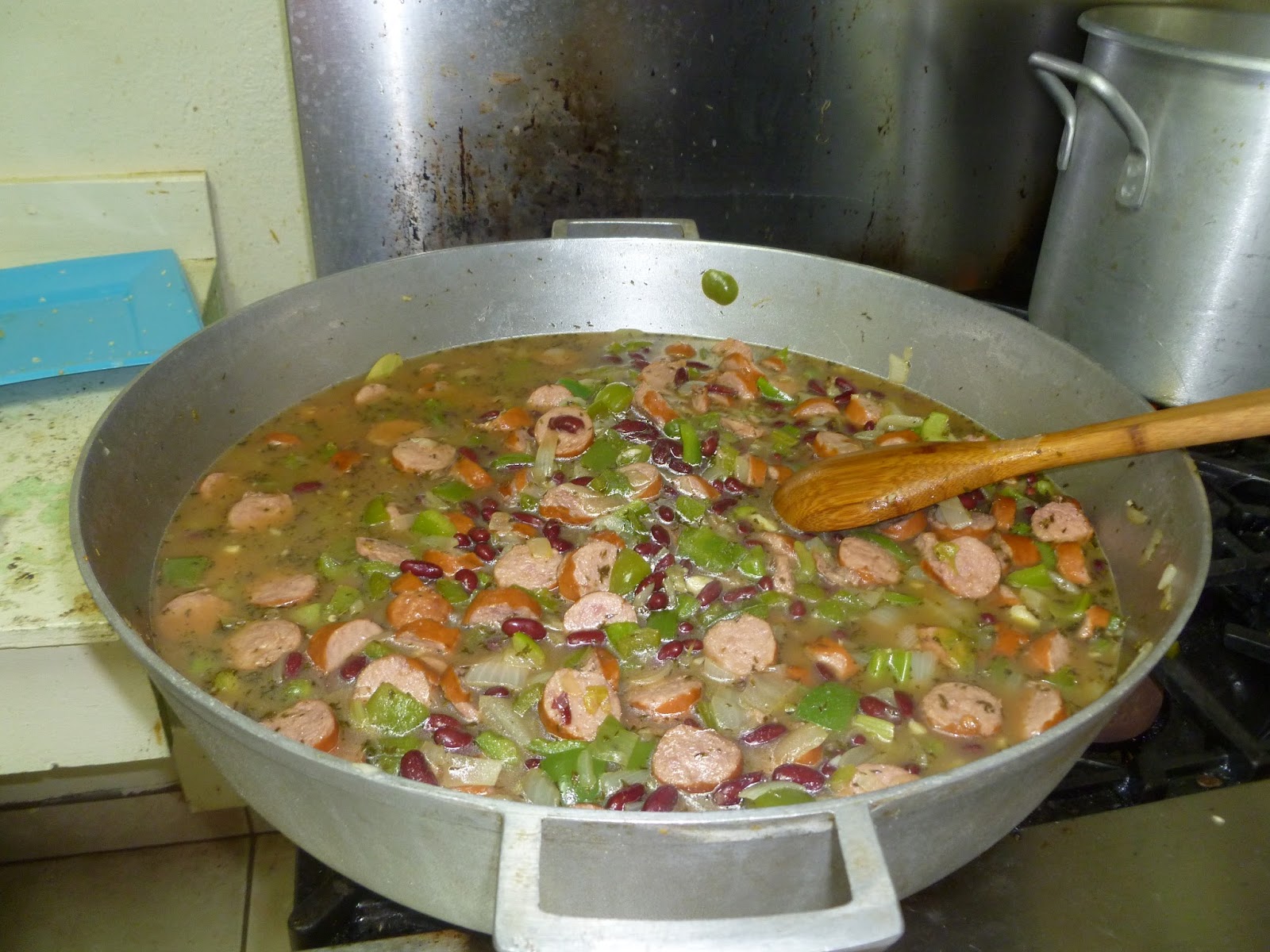
Lunch was leftover red beans and rice. Which was delicious after a day to blend the flavors. After lunch the group split in two with some painting and some assembling food packages. The food distribution ministry at St. Patrick’s began about 18 months ago. St. Patrick’s has three parish churches – one at Gregory Town, one in Governor’s Harbor and one south in Savannah Sound.

ALEXIS – “Yesterday our youth mission trip to the Bahamas went well. Our group was finishing up the painting on the house. We also helped make care packages that will be given out by us. We ended the day with a meeting to talk about all we learned as a group.”
After work concluded for the day we went into Governor’s Harbor for ice cream. The view from the shop was breathtaking with St. Patrick’s church visible right at the bend.

Camella’s family owns a lake/resort called the Green Turtle Pond. It is a large lake formed by a blow hole. The blow hole is formed by two limestone tubes – one from the Atlantic side and one from the Caribbean side. When the tide shifts the water in the lake is pushed and pulled. Camella’s resort is called Green Turtle Pond because of the presence of a small population of green sea turtles. Green sea turtles, which are endangered, are one of the largest on earth and are indigenous to the Bahamas. These turtles nest in South America and swim to the Bahamas as adults where they feast on the sea grass providing an important ecological link in environmental diversity. The green turtle preserve was started by Camella’s grandfather. After his death it lay quiet until a cousin of hers from Everett, WA encouraged the family to resurrect the preserve as a place for tourists to kayak, body board and enjoy the turtles. A group of girls and Fr. Lance were able to visit the “pond”.


After two days of hard work we were all ready for refreshment. We piled into the truck and went to Sky Beach Resort which has an infinity pool that overlooks the Atlantic Ocean. One the way we saw a host of red crabs all crossing the highway from the Caribbean side to the Atlantic side. This is mating season and the crabs are out from about 4:30 pm to 6:30 pm. You have to try and avoid running over them as they cross the road. In other seasons these crabs are invisible in the bush.


Sky Beach was so beautiful and relaxing after a hard three days. The sand on the beach is like flour it is so fine. The Atlantic breaks off in a steep shelf, with the waves crashing gently on short. The pool was about 85 degrees with a bar built into the side. We were greeted by Shannon, who has been with us every day, bringing ice, taking us to the store, providing support and encouragement. Shannon and Cece (who manages Sky Beach) paid for the bartender to give each girl a smoothie!

FAITH – “We went to the Beach Club which is a swimming pool. It has access to the Atlantic Ocean. We swam in both and I had a mango smoothie at the pool bar. Two of the ladies we met, Shannon and Cece, bought us all one drink. When we went to the ocean the sand was so soft and the water was pretty warm. The water was super salty and it stung my eyes. It was still pretty though.”
After the pool we were tired and hungry. We closed our day with a wonderful dinner at the Sunset Inn. This restaurant is pointed towards the sunset and sits across the water from Governor’s Harbor. We all had local seafood – especially conch. The bugs were out however and we went through most of a bottle of bug spray. The sun went down through a towering bank of thunderclouds. The light went from yellow to orange to red and finally to sundown. As it has every night we witnessed a stunning lightening display.


After dinner it was back to our units for a nightly meeting, internet time, phone calls home and bed.

Day Three - Meeting the community

DAY THREE - TUESDAY

Eleuthera is breathtaking in its beauty and quiet. The total population on Eleuthera is listed as 8,000 – about 1/3 in the north, 1/3 in the center, and 1/3 in the south. We are staying in the center of the island in Governor’s Harbor which was the first capital of the Bahamas in 1685. The buildings are one and two stories with typical British colonial architecture. In true British tradition the government buildings are color coded. Pink buildings are government, schools are yellow with green trim, police buildings are green and white. Construction is largely out of concrete. With no forests, wood must be imported and wooden buildings tend to be large and expensive.


The quiet is extraordinary. Our cell phones work only with internet and internet is limited to a small outside area between the two condos. We are all disconnected and the girls have commented about how much more community we have and how we are really present to each other and to our mission. Noises include the cicadas which serenade us morning and night, the laughing gulls and the wind. We are on the Caribbean side where the water is calm and there are no crashing waves or ocean sounds.


People are so welcoming. Everyone waves. The grocery stores are a community event. The rootedness of the Bahamas is striking. Except for a few Americans who have retired or have second homes here, the people in Governor’s Harbor are Bahamians whose families have been here for hundreds of years. Families include grandparents, parents, aunts, uncles, cousins – with hundreds of years of family history and place– something that is hard to imagine in Seattle.

On Day Three we woke up to hot rooms. After a breakfast of homemade bread, jam and peanut butter we were ready for work. Day Two we had two ministries – we began priming the two story rectory and we made a community dinner of red beans and rice for the parish.


Painting in the heat is really hard work. The girls engaged and within a short time the skills really improved. Our extended host families provided us with coolers full of ice. We are going through four or five water bottles each everyday. The girls are in teams and the teamwork is amazing. Jenness and Janice Curry joined us for painting, and painting, and painting. Janice’s granddaughter, Mandolin (age 11), has incorporated herself into our group to help with painting and our meals.


We ate lunch in the “prayer garden” – a new feature of the church grounds with trees, grass and benches. The prayer garden is a former parking lot. Now people are beginning to use it for lunch and sitting in the shade and quiet. In addition to quesadillas which we cooked in our unit, we were given pineapple tarts and mangoes by the community.


After lunch we split into two teams – painting and cooking. We have intentionally chosen to buy as much as we can here in Eleuthera to support the local economy, so we had two trips to the store for ingredients for red beans and rice. The grocery store is a social event. And so expensive!!

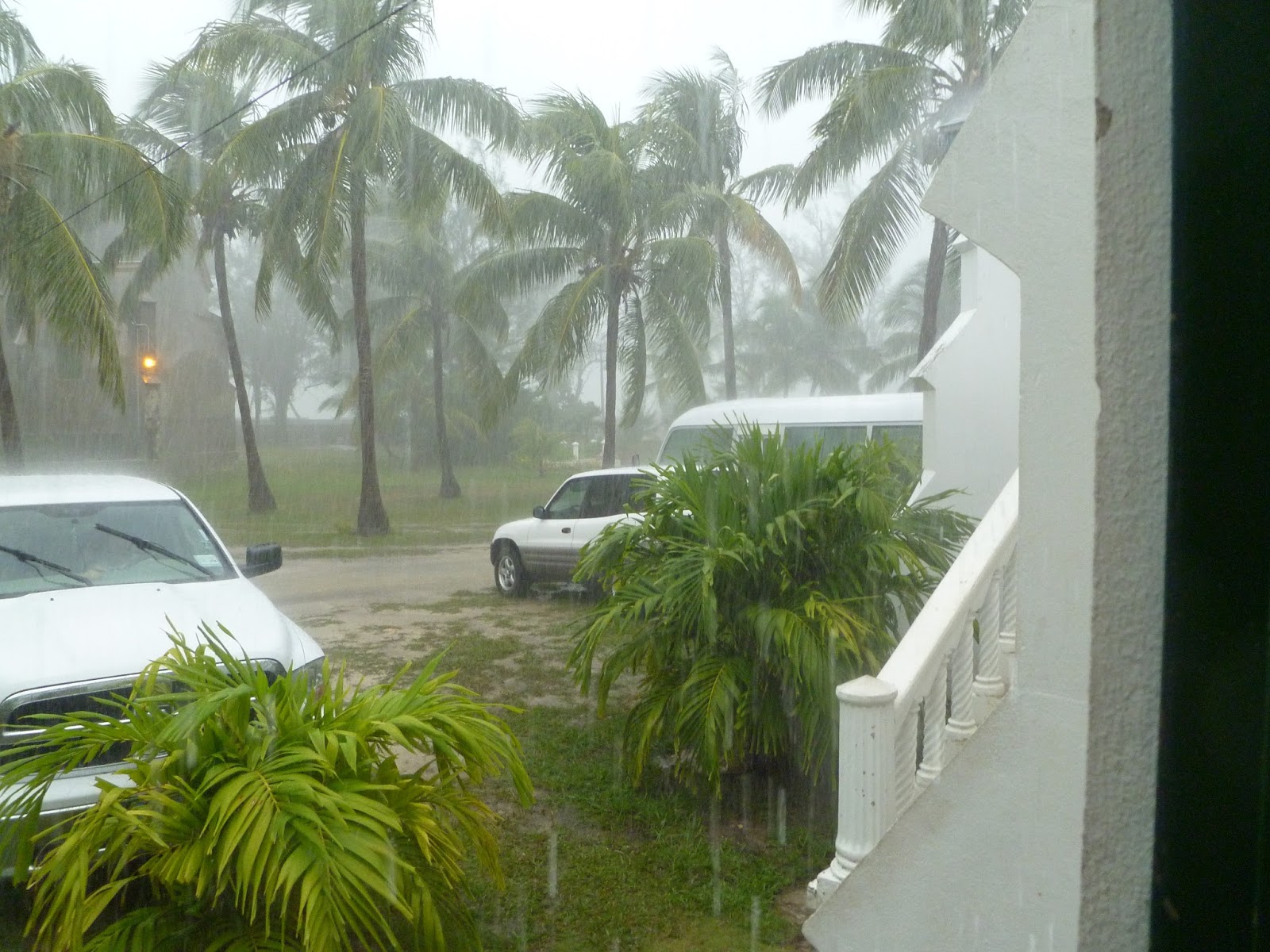
 While we were cooking an explosive storm blew through. With no barriers between Governor’s Harbor and the storm, the thunder and lightening exploded right on top of us. The rain was so heavy that we couldn’t see the sea which is less than 100 yards from the door. The windows were open and the community center had pools of water. Mops were in order. We mopped and decorated the parish hall at the same time!


Our cooking team was supported by an amazing woman, Sandra, who coordinates much of the food ministry at the parish including meals, food and soup distribution. She brought us knives and huge pots and energy. Sandra’s granddaughter, Dametra (age 8), has joined our mission team and helped with painting, cooking and community.

 RACHAEL – “Working here in Eleuthera has been such a blessing. Every Bahamian we have encountered has been nothing but kind and hospitable to us. My favorite moment so far has been cooking the sausage and rice meal and serving it to the Bahamians. We were able to be part of a tight community that is so welcoming and fun. When we ate the food with them, we mingled with everyone and got the chance to learn more about Eleutheran culture. I love meeting new people here every day and I look forward to making connections with more in the future.”

The community began arriving around 6 pm. We had the joy of meeting so many interesting people who were interested in building community with us.

After dinner we retired to our units, had our evening program and songs and retired. This was the first opportunity of the day to “connect” so some of us called home, checked Instagram, Facebook and email. The air conditioning had been fixed and we collapsed into bed.

Thursday, July 21, 2016

Day Two - Lots of travel


DAY TWO - MONDAY

At the airport on Sunday everyone was issued $35 for food. Remarkably, by noon the next day when we were finally in Ft. Lauderdale after two flights we still had over half the dollars left which we pooled for a meal.

We arrived at Eleuthera at 4pm on Monday and went through customs. St. Patrick’s parish sent their bus to pick us up. Fr. Lance was at the airport to greet us along with George, our bus driver. The bus ride from the airport to Governor’s Harbor where we are staying is one hour.


The Bahamian Archipelago, is part of a land mass that broke away from the African continent millions of years ago and was pushed up by plate techtonics. The islands stretch in the shape of a broad comma from northwest to southeast. Unlike Hawaii which is volcanic, the Bahamas are a long series of reefs which are largely limestone with the highest point about 200 feet above sea level. Reefs surround each of the islands providing a rich environment for sea life. In addition to limestone some of the rock formations are ancient granite from Africa. Centuries ago, the granite was used as ballast in ships. Today some granite is exposed in outcrops pointing into the sea. Eleuthera is one of 30 islands which are inhabited – each island has a distinct personality and dialect.


Driving south from the airport our first stop was the Glass Window Bridge. An amazing sight where the Atlantic Ocean meets the Caribbean across a narrow one-lane bridge. The Atlantic is a deep blue with breaking waves on the east. The Caribbean to the west is teal green and very calm. We all got out of the bus and walked to the edge of the Atlantic and turned toward the start of the Caribbean! It should be on the Natural Wonders of the World list!


South of the Glass Window Bridge we passed through a large area that had been the largest dairy farm on the islands. After independence in the 1970s, groups of militia formed and demanded “taxes” from major industries. The dairy owner abandoned the dairy and cows in place. The cows are gone and the area is fallow today. Towering rock silos stand as sentinels to the past. We stopped at a small local fruit stand along the highway to get coconuts and fresh fruit. Everyone got to taste deliciously fresh coconut water.

We arrived at our accommodations around 6 pm– the Laughing Bird named after the native black faced gulls who flock and “laugh”. We have two small condos with three girls and two chaperones in each. Our hosts in Eleuthera, Al and Janice Curry, hosted us at their home for a swim, barbeque and s’mores. We met wonderful people at the barbeque who we continue to work with and are very  supportive of our mission. One wonderful couple, Arthur and Kayla, brought over fresh bread and homemade local pineapple and guava jam, and coconut stacks which has become our breakfast each day.


When we got back to the condo after dinner we discovered that one unit had lost its air conditioning. At 88 degrees at night and 90% humidity we made do with three fans. The wonderful thing about having a red eye with no sleep was that everyone slept well despite the heat and we were ready to go the next morning. Pro tip: Damp sheets can substitute for air conditioning!

The girls are wonderful. Despite all these delays and changes and surprises, everyone was resilient. Great humor and teamwork.

Day One - And we're off!

DAY ONE - SUNDAY

What a long day! Over twenty-four hours of travel to get to Eleuthera! Our day started at the 10am service when our team was commissioned for ministry. Later we met at church at 3pm to go to the airport. When we arrived at the airport we discovered that our cooler was 15 pounds overweight – or $200 surcharge!! So we removed some ice and prayed that our frozen food would stay fresh. And it DID.


We were scheduled for a 7:15 pm flight to San Francisco with a connection to Ft. Lauderdale and a second connection to Eleuthera. But San Francisco was delayed…and delayed…And we would miss our connection! Bailey, Chris and Nancy contacted United to reroute our flight. The customer service agent was wonderful! We wound up rerouted through Houston with only about 4 hours total delay. It was a God thing.


To help us pass our eight hours of pre-flight lay-over time, Chris and Bailey designed a scavenger hunt. The girls were divided into two teams and given a list of 10 items to find plus 5 bonus items. The girls swarmed all over the airport to find and record on cell phones – a family with matching outfits, someone running for a plane, an American flag shirt/hat, trolley with people and a flashing light, romance novel, polka dot luggage, phone booth, currency exchange, glass art and then native American art, technology and twins.

We finally got on our flight to Houston at 12:01 am for a red eye!

Wednesday, May 25, 2016

Learning about Culture and History of the Bahamas and Understanding the Critiques of Voluntourism

Do you want to follow along with our learning in preparation for the trip? See a list of the articles that we have referenced and discussed during recent trip meetings.

HISTORY AND CULTURE

Countries and their Cultures: Bahamas
http://www.everyculture.com/A-Bo/Bahama-Islands.html

Encyclopedia Britannica: The Bahamas
http://www.britannica.com/place/The-Bahamas 

UNDERSTANDING THE CRITIQUES OF VOLUNTOURISM

Medium: The Reductive Seduction of Other People’s Problems
https://medium.com/the-development-set/the-reductive-seduction-of-other-people-s-problems-3c07b307732d#.gmnbdj8si

Huffington Post: The Problem With Little White Girls, Boys and Voluntourism
http://www.huffingtonpost.com/pippa-biddle/little-white-girls-voluntourism_b_4834574.html

Matador Network: Why you shouldn’t participate in voluntourism
http://matadornetwork.com/change/why-you-shouldnt-participate-in-voluntourism/


Tuesday, April 5, 2016

Bahamas History and Upcoming Fundraising Events

During March’s meeting, we discussed the history of Eleuthera based off of two historical packets we were assigned to read from the previous meeting (links to these documents can be found below). We came prepared to the meeting with facts and information that stood out to us about Eleuthera.

From the Lucayan people, to Christopher Columbus stepping onto the island in 1492, to the Bahamian independence in 1973, we learned about the story of Eleuthera. We talked about Bahamian culture and the lifestyle of the indigenous peoples, the Lucayans. The name "Bahama" is believed to be inspired by Columbus's description of the island: "baja mar"--Spanish for shallow sea. The Bahamas has a reputation for its role in piracy during the early 1600s to the late 1700s, and the reason it was a popular stop for pirates was because of its geography and location. The several islands of the Bahamas made for great hiding places for treasure and they were also adjacent to a shipping lane where merchant ships passed through, making the ships an open target for pirates.


Image from: http://www.bahamas.com/history

Both the Spanish and the British colonized the Bahamas but the British were the primary colonizers. English puritans, in seek of religious refuge, found a home on the Bahamas. With a large British presence in Eleuthera, along with other islands of the Bahamas, American Loyalists sought a haven free of persecution after the Revolutionary War so they moved to the islands, and with them they brought their slaves.

The economics of the Bahamas was not always dependent on tourism like it is today. Instead, the Bahamas made profit from trading goods, and even had a role in trade during the U.S. Civil War. Britain’s textile industry depended on Southern cotton; however, the Union blockaded British ships from reaching Southern ports so blockade runners from Charleston met British ships at the Bahamas and traded cotton for British goods. Upon their return, they sold their shipment for huge profits.

In 1919, the United States passed the 18th amendment prohibiting the production and distribution of alcohol. The colonial government expanded Prince George Wharf in Nassau to accommodate the flow of alcohol. When Prohibition ended in 1934, so did the enormous revenues. Combined with the collapse of the sponge harvesting industry, it economically devastated The Bahamas. From there, the Bahamian economy needed to recover and reform its previous practices for profit, causing many to turn to tourism. The Hotel and Steam Ship Service Act of 1898 opened up opportunities for the Bahamian people. This act provided the government support needed for the construction of hotels and subsidized steamship service. With that and the beautiful nature of the Bahamas, the islands became a resort destination with a reputation of relaxation and luxury.


Image from: http://littlehousebytheferry.com/2013/09/

On July 10, 1973, The Bahamas became a free and sovereign country, ending 325 years of British rule. However, The Bahamas is a member of the Commonwealth of Nations and July 10th is celebrated as Bahamian Independence Day.

The second half of this meeting we worked on cementing all the details for our future fundraising projects. Our fundraising groups worked to plan a movie night, a dinner theater performance, and bunco/bingo game nights.

On Sunday, April 10th at 5pm, St. John’s will host a piano recital featuring music from the talented Hartwig Eichberg. Dinner will be prepared by the Blue Aprons, and a suggested donation of $25 per person will be contributed to our Youth Mission Trip budget. Please email bailey@stjohnskirkland.org for additional information.

- Rachael Armstrong and Sara Anderson

Wednesday, March 9, 2016

Mission Trip Overnight Kickoff...


On January 22nd-23rd we had a kickoff overnight with all youth participants. We practiced elevator pitches explaining our trip to say to supporters when we are asking for support. We typed up our fundraising letters and mailed them to our family and friends.

One activity that our group did was to draw a bus and discuss how each van part (i.e. headlights, steering wheel, wheels, luggage, etc...) is related to the aspects of ourselves and our group that we are bringing on the trip (i.e. luggage = the hope, talent, time that we will bring with us to share with folks in the Bahamas).

The most memorable part was when our group talked about how this trip would change us; it will change how Bahamians look at us, and how we understand the Bahamas. We will help people who are less fortunate and at the same time expand our horizons. We are going on this trip to work, to help, and to create relationships, not just go on a sunny vacation. The weekend taught us more about what we have to offer and how with God's help we can share our time and talents.

- Faith and Claire George